AI agents that run processes inside your plant.
We interconnect your ERP, your sensors, your time clock and your machines — systems that don't talk to each other today — and we power them up with AI that runs on your own infrastructure.
For manufacturing plants and industrial operations running several systems that don't talk to each other today.
The assessment costs nothing: you get it in writing — which systems aren't talking to each other and which data isn't being captured.
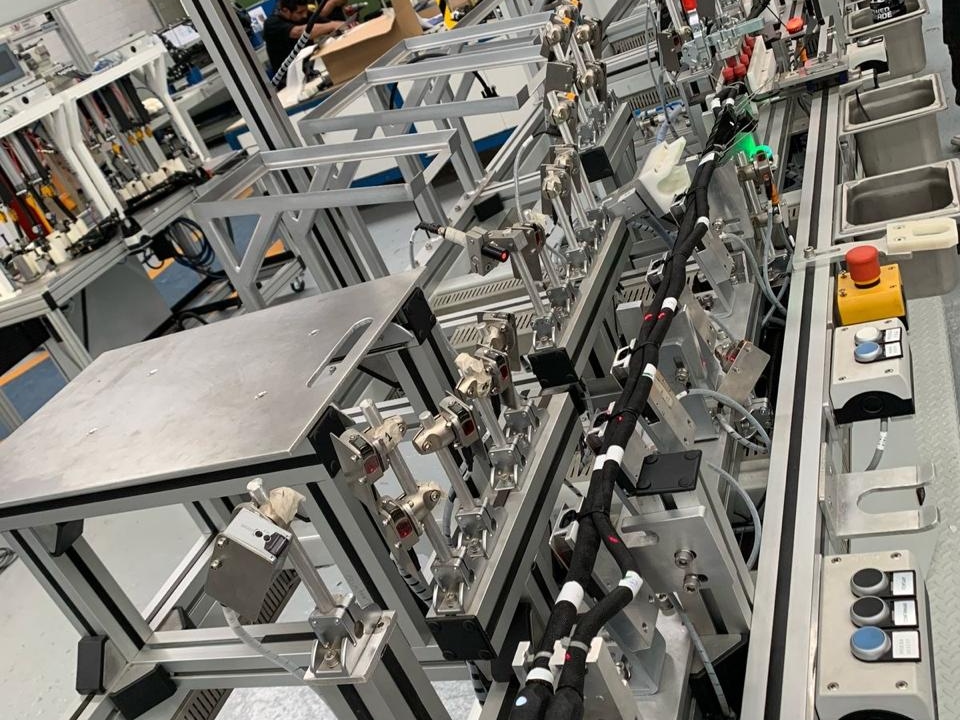
Five of seven events
passed with nobody able to attend them.
Most delays in a plant are not technical, they are scheduling. Someone has to open two systems, cross-check the information and tell another department. An agent does it continuously, with no shift and no forgetting.
One agent per process.
11 processes you already know.
Each agent watches its process, spots the deviation, cross-checks whatever is needed across systems and leaves the action prepared. The agent does not decide: it prepares. The decision stays with your manager.
Actual material consumption per line, warehouse stock and the committed dates of open orders.
Projects when each material will run out at the current rate and compares it against the supplier's lead time.
- Cross-checks production consumption against available inventory
- Reviews open orders and the committed date of each one
- Detects whether the material runs out before the next delivery arrives
- Prepares the requisition with a suggested quantity and justification
- Alert to purchasing with the remaining days of margin
- Pre-filled requisition ready to authorise
- Copy to the line lead about the risk of a stoppage for material
Parts reported on the floor, inventory movements and accounting records for the same period.
Differences between what the plant produced, what left the warehouse and what was recorded in accounting.
- Adds up each line's real output per shift
- Compares it against the day's inventory movements
- Checks that every movement has its accounting entry
- Isolates the discrepancies and sorts them by likely cause
- Reconciliation report every early morning
- Discrepancies with amount and responsible area
- Month-end close with no last-minute surprises
Inspection results by line, part number and raw-material batch.
When the defect on a part number exceeds your limit, or when it repeats across batches from the same supplier.
- Watches the defect by shift, operator and part number
- Correlates the defect with the raw-material batch
- Opens the non-conformance with the evidence attached
- Notifies production and, if the source is material, purchasing
- Non-conformance opened with evidence and traceability
- Alerts the supplier when the pattern points to the material
- Follow-up of the action plan until it is closed
Access and attendance records against each line's production plan.
Absences and late arrivals at shift start, cross-checked against which lines are left below minimum staffing.
- Reads actual attendance at the start of the shift
- Identifies which lines fall below staffing
- Checks who holds the certification to cover the position
- Proposes the coverage and notifies both managers
- Alert to the supervisor before the line starts
- Coverage proposal with certified staff
- Incident record ready for payroll
Validity of permits, licences, equipment calibrations and staff certifications.
Any document or certification that expires within the risk window you define.
- Tracks expiry dates across every area at once
- Escalates the alert as the deadline approaches
- Identifies who owns each renewal
- Builds the evidence file for the audit
- Early warning with an owner and a committed date
- Compliance dashboard always up to date
- File ready when the auditor arrives
The complete history of every part: material, machine, shift, operator and inspection.
A customer complaint arriving with a batch or part number.
- Traces the batch back to the raw material
- Identifies the machine, shift and operator that produced it
- Retrieves the inspection records for that batch
- Determines which other parts share the same origin
- Complete traceability file for the batch
- The real scope of the problem: what else is at risk
- Response to the customer with documented evidence
Cumulative output, scrap, stoppage hours and labour hours for the period.
That the closing date is approaching and which information is still missing or inconsistent.
- Consolidates output, scrap and stoppages for the whole month
- Cross-checks labour hours against production orders
- Flags what still needs to be captured and who should capture it
- Builds the pre-close package for accounting
- Pre-close package delivered days ahead
- Open items with an assigned owner
- Less overtime for your administrative team
Equipment condition, spare-parts stock and the week's production plan.
A condition alert whose spare part is not in the warehouse, or that clashes with the production plan.
- Receives the equipment condition alert
- Checks whether the spare part is available in the warehouse
- Raises the requisition if it needs ordering
- Proposes the window that least affects the plan
- Scheduled intervention with the spare part secured
- Requisition raised before it becomes urgent
- Window agreed with production, no surprise stoppage
Equipment manuals, procedures, standards, work instructions and change records.
When someone on the floor needs a procedure, a specification or the history of a fault, and today has to dig through folders or ask around.
- Receives the question from WhatsApp or from the station
- Searches indexed manuals, standards and procedures
- Cites the document and the section the answer comes from
- Flags whether the procedure consulted is expired or under review
- Answer with the source cited
- The current procedure, not an old copy
- Record of what was consulted and who consulted it
OEE, stoppages, quality, maintenance, inventory and what the other agents report.
What changed compared with the previous period and which decisions still have no owner in each area.
- Cross-checks the signals from every area in a single cut
- Separates what is a trend from what is an isolated event
- Identifies decisions that have gone days without an owner
- Builds the summary with the source data behind each point
- Executive summary before the meeting
- Pending decisions with area and owner
- Link to the source data for each point
The events raised by the other agents: supply, quality, maintenance, coverage and compliance.
When two events from different areas are the same problem, or when one blocks the other.
- Groups the events that share a common cause
- Prioritises by impact on production
- Assigns each case to the right owner
- Escalates whatever has gone unattended too long
- One alert per problem, not five
- Clear priority for the shift
- Escalation with the full history
The agent does not replace the area manager: it hands over the cross-check already done and the proposed action so the person can decide. Every action that changes a system is logged with who authorised it.
The timings are representative of comparable operations. The real scope is defined in the diagnostic.
What runs inside your plant
and what leaves only if you allow it.
Where the infrastructure lives, what data crosses the boundary, who authorises each action and what keeps working if the internet goes down.
Infrastructure in your plant
No internet egressModels, document index and orchestrator run on a GPU machine inside your network.
Hybrid, with a gate
Only what is configured leavesOnly the fields you configure go out to an external model — ChatGPT, Claude or whichever you choose — to reason over that context.
The whole architecture in the cloud
When the data is not sensitiveOnly data capture stays in the plant. Models, index, orchestrator and data live in your cloud.
Where the agent gets
what it knows about your plant.
Your SAP doesn't know what the line reported, and the camera caught the defect without anyone finding out. We build the layer that joins them, and the agents run on top of it. Traffic goes both ways: the agents don't just read, they also write back in the right system. Pick a scenario to see what is measured, what is processed and what is delivered.
See the data paths in text the six scenarios, step by step
GEN General architecture from data to decision
Data to measure·What your process already generates and loses today
Sensor or reader·Turns the physical event into usable data
Orchestration layer·Reads the sensor, normalises the reading and delivers it ready to use
Internal network·Travels inside your plant, without going out to the internet
Diagnostic engine·Applies your rules, your standard and your criteria
Agent with human supervision·Delivers the decision ready; your manager authorises
FAL Failure prevention alert before the stoppage
Rotating equipment·Vibration starts to change
Permanent sensor·Measures vibration and temperature without stopping
Orchestration layer·Normalises the reading and hands it ready to the engine
Internal network·The data travels without leaving your plant
Diagnostic engine·Compares against the standard and against its own history
Alert and order·Alert with severity and a recommended action
PRO Production record paperless capture
Machine cycle·The machine finishes a part
Field unit·Counts parts and measures the real cycle time
Orchestration layer·Normalises the reading and hands it ready to the engine
Internal network·The data travels without leaving your plant
Rules engine·Assigns shift, order and operator
Management system·Production recorded with no data-entry clerk
CAL Quality inspection with no tired inspector
Part on the line·Reaches the inspection point
Industrial camera·Records at line speed, without slowing down
Orchestration layer·Normalises the reading and hands it ready to the engine
Internal network·The data travels without leaving your plant
Inspection model·Trained on your parts and your defects
Rejection and record·The bad part does not move on to the next process
AUD Audit assistant evidence always ready
Plant walkthrough·A deviation is detected on the floor
Recorded on the spot·Photo and note, no paper forms
Orchestration layer·Normalises the reading and hands it ready to the engine
Internal network·The evidence is kept within your organisation
Audit assistant·Cross-checks the evidence against your own procedure
Finding and file·With severity, owner and committed date
TRA Traceability history per part
Part identity·Each unit carries its own identification
Read point·Records the passage through each stage
Orchestration layer·Normalises the reading and hands it ready to the engine
Internal network·The data travels without leaving your plant
Chain of events·Links material, process, operator and result
File per part·Backward and forward tracing
Most industrial AI projects don't fail because of the model. They fail because nobody built the layer that connects the data to the system.
See the scenarios in text the spec sheet for each one
ARQ-00 General architecture IT · MAINTENANCE · PRODUCTION · QUALITY
Most industrial AI projects don't fail because of the model. They fail because nobody built the layer that connects the data to the system.
Equipment, sensors and systems you already have running
The orchestration layer that reads, normalises and exposes the reading
Your standard and your procedure, not a vendor template
Inside your network — the processing happens in your plant
Your manager. The agent prepares and proposes
ARQ-01 Failure prevention MAINTENANCE · PRODUCTION · PURCHASING
An unplanned stoppage is detected when the line has already stopped. You know the cost per hour better than anyone — we go after the hours.
Vibration, temperature, current draw and operating hours
Mechanical degradation: bearings, misalignment, imbalance
Electrical anomalies such as phase imbalance or overconsumption
The applicable standard and that equipment's own history
Early warning instead of reacting after the stoppage
The spare part is ordered in time instead of paid for as an emergency
ARQ-02 Production record PRODUCTION · PLANNING · WAREHOUSE · ACCOUNTING
Production is logged by hand and reviewed once the shift is already over. By the time the report reaches the meeting, it is no longer useful for acting.
Sensors, vision systems or straight to the PLC
Part count, cycle time, stoppages and stoppage cause
Load split across lines using real capacity, not an estimate
Production and inventory planning
Live information instead of an end-of-shift report
Re-entry is eliminated; OEE stops being a guess
ARQ-03 Quality inspection QUALITY · PRODUCTION · PURCHASING
Visual inspection depends on the time of day and on who is at the station. Whatever slips through reaches the customer.
Every part at line speed, without slowing the process
Model trained on your parts and your real defects
Yours, not the one the equipment ships with
Consolidates the shift's data and leaves the findings ready
The night shift is covered with the same criteria as the morning shift
Defect linked to shift, part number and raw-material batch
ARQ-04 Audit assistant CALIDAD · SEGURIDAD · RH · MANTENIMIENTO
The compliance evidence already exists, but it is scattered across folders, photos and forms that nobody can find when the auditor arrives.
Data that must meet a standard and validity dates about to expire
Project progress tracked from deliverable dates
Compares the evidence against your regulations using document retrieval
Your procedure loaded, not a generic template
Prioritised findings with an owner and committed date
The file is built as the month goes on, not in the week before
ARQ-05 Traceability WAREHOUSE · QUALITY · LOGISTICS · SALES
A complaint with a batch number triggers a manual search across systems that don't talk to each other. And the physical inventory count stops the warehouse.
Sensors, GPS, NFC and RFID, whichever suits the process
History per part: material, machine, shift, operator and inspection
Where the material is and since when, without walking the plant
Cyclical and continuous, without stopping the operation
Determines which other parts share the same origin
Inventory reflects the floor, not the last manual entry
Each block describes what role it plays, not which product or protocol solves it. It shows capability without exposing implementation or any client's information.
What feeds
the agents.
An agent is only as good as the data it receives. These are the eight sources we connect and instrument — hardware, software and AI with in-house capability, with no subcontracting and a single point of contact.
AI agents that execute
Not chatbots. Agents that query your systems, apply your rules, create records and trigger real processes — with the model running on your own infrastructure if your data can't leave the plant.
- They take actions in your systems, not just answer
- Local inference: the processing happens inside your network
- The agent prepares the decision; your manager decides
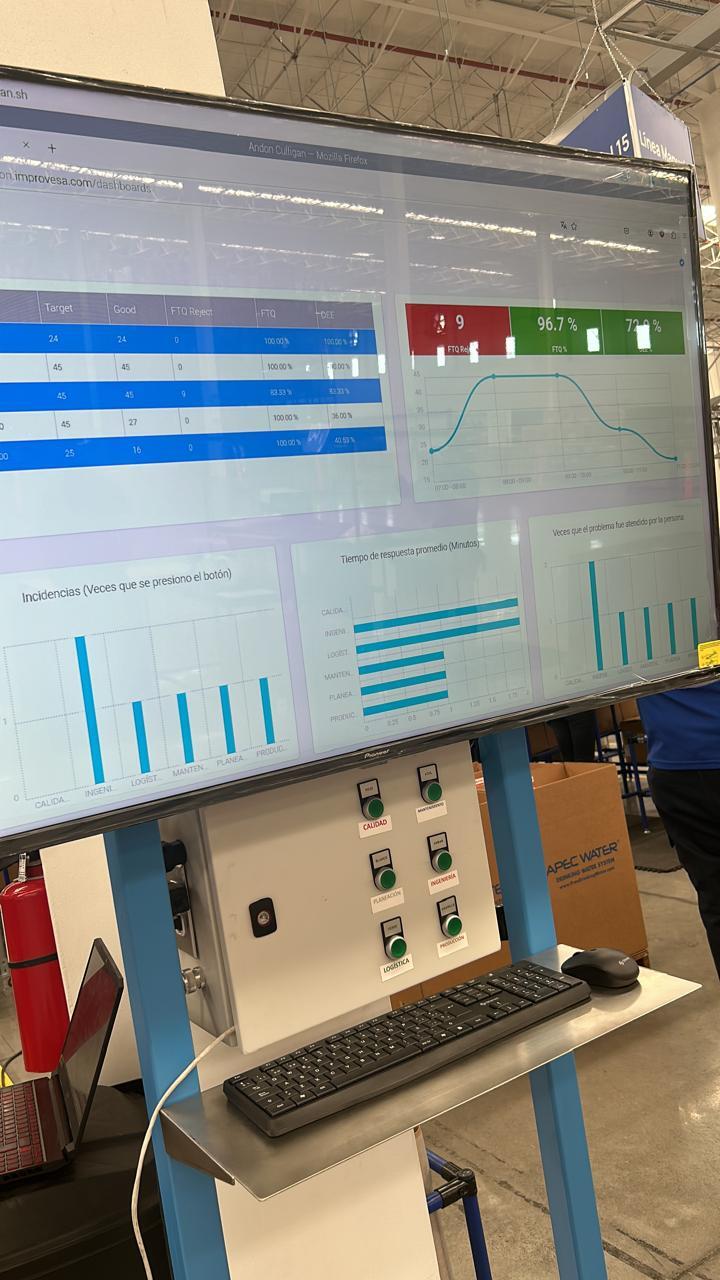
Real-time machine monitoring
Any machine connected, with or without a PLC. Live dashboard, preventive alerts and anomaly detection before the stoppage.
- Connection to the existing machine without replacing its control
- The alert reaches your phone before the stoppage happens
- Complete history for maintenance and audit
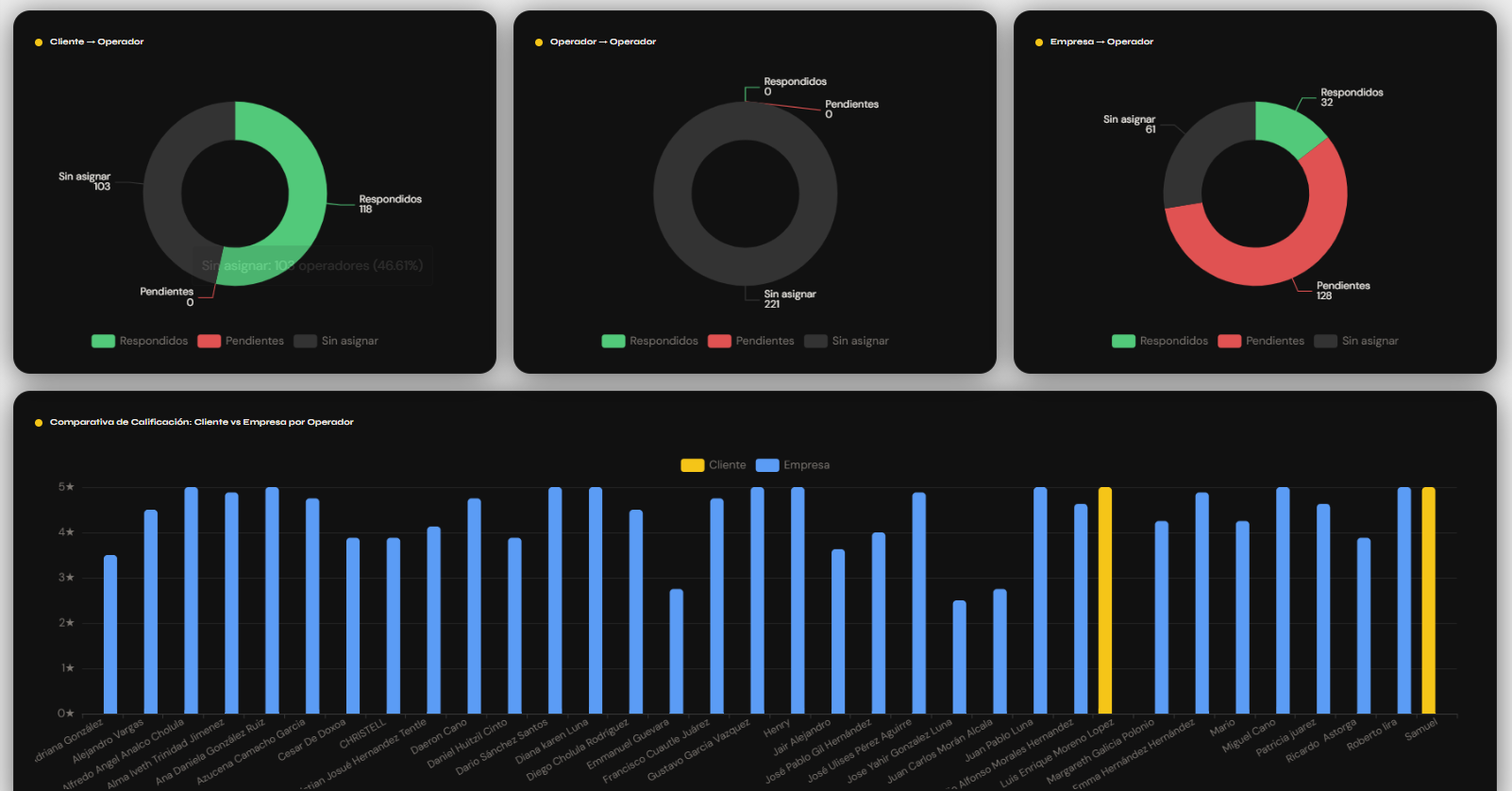
Custom vision systems
Vision systems developed entirely to fit your process, your part and your budget. We catch what the human eye can't sustain shift after shift.
- Models trained on your parts and your real defects
- Inspection at line speed, without stopping production
- The night shift is covered with the same criteria as the morning shift
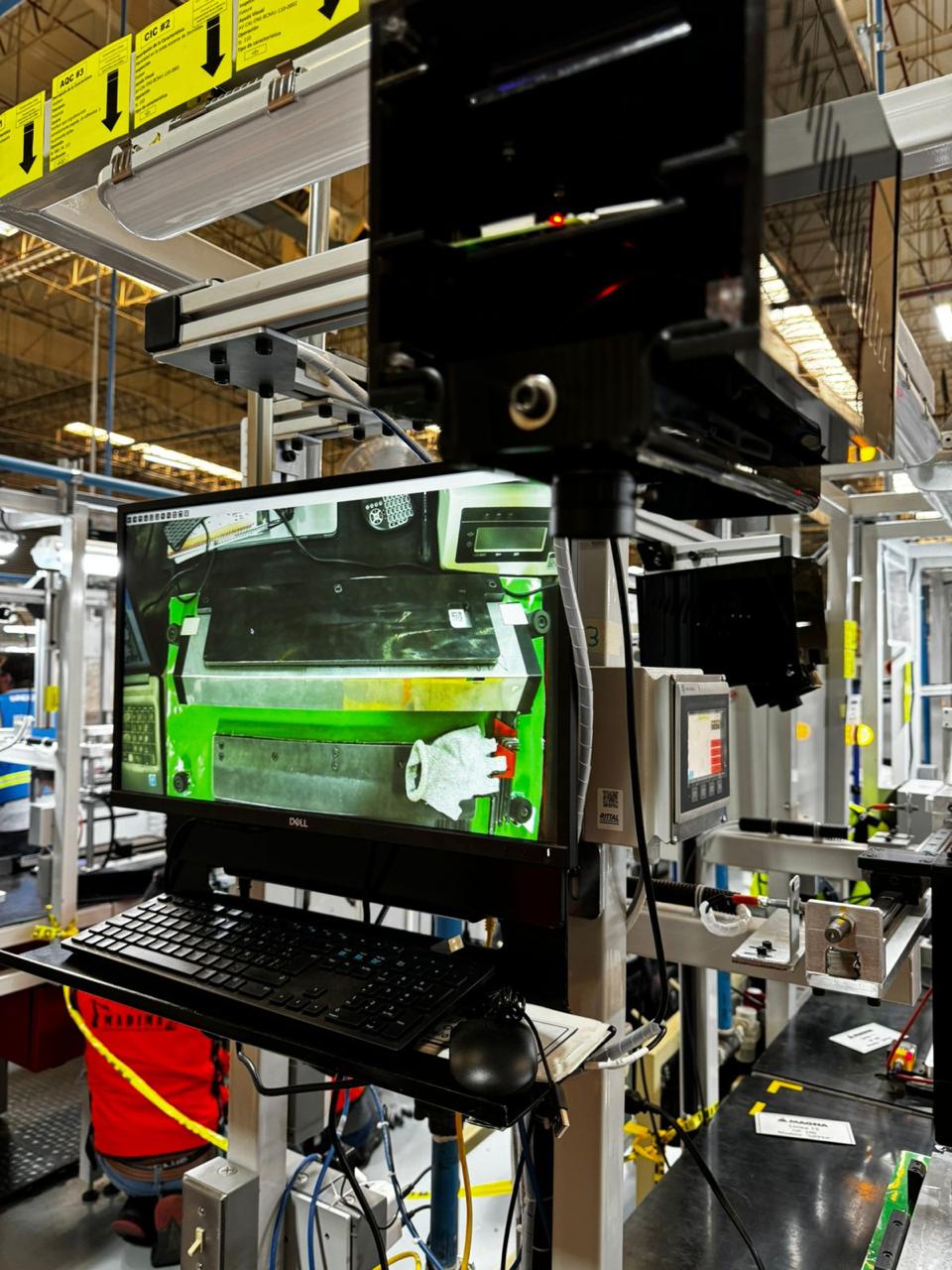
Custom industrial software
Dashboards, platforms and integrations with the ERP you already use. Built around your process, not a generic product you have to adapt to.
- Integration with the ERP you already have installed
- Access from the plant, the office and your phone
- Grows in modules, with no per-user licence
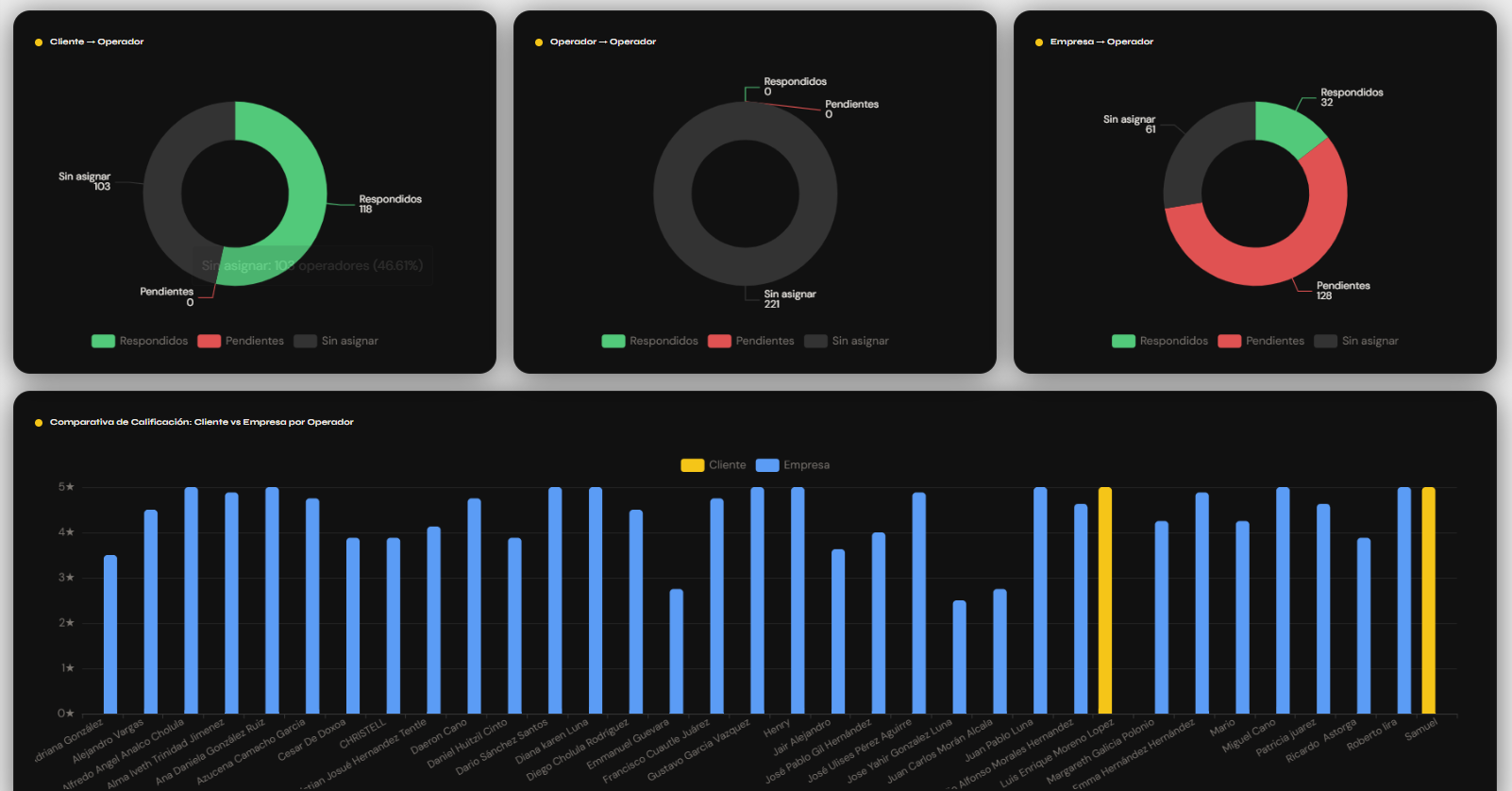
Stations and fixtures
Poka-yoke with built-in vision. Hardware, software and control in a single station designed for your exact process.
- Designed and built around your part, not from a catalogue
- Presence, orientation and assembly validation
- Automatic record of every unit processed
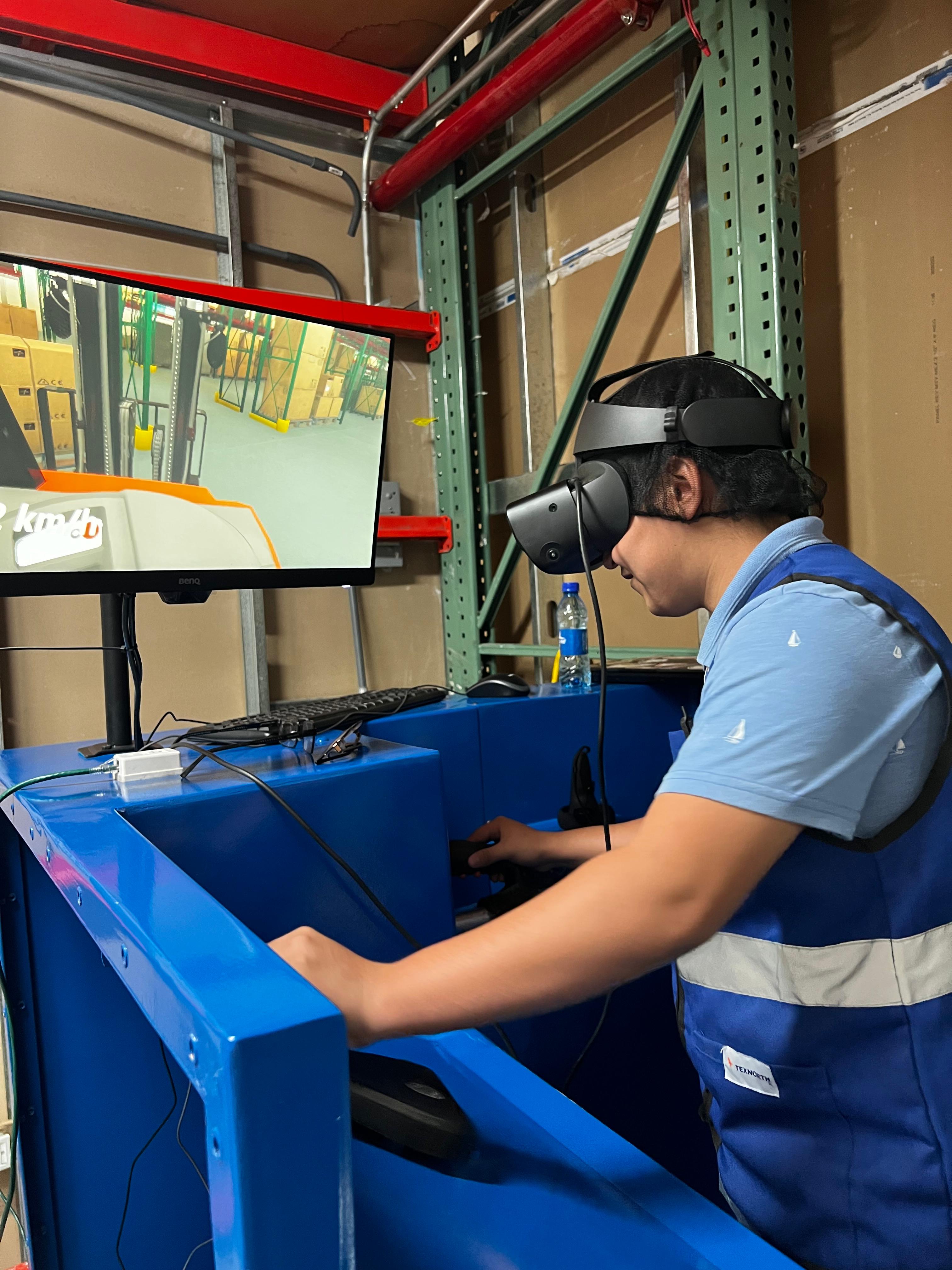
Industrial simulators
Virtual reality environments to train operators without tying up the line or exposing them to the real equipment.
- Training without stopping production
- Objective measurement of operator performance
- The critical manoeuvre is repeated as many times as needed
Product traceability
RFID, NFC and GPS to know where every unit is and where it has been, across the whole chain.
- Reading without line of sight and without stopping the flow
- Product genealogy, from raw material to shipment
- Detection of deviations in the logistics chain
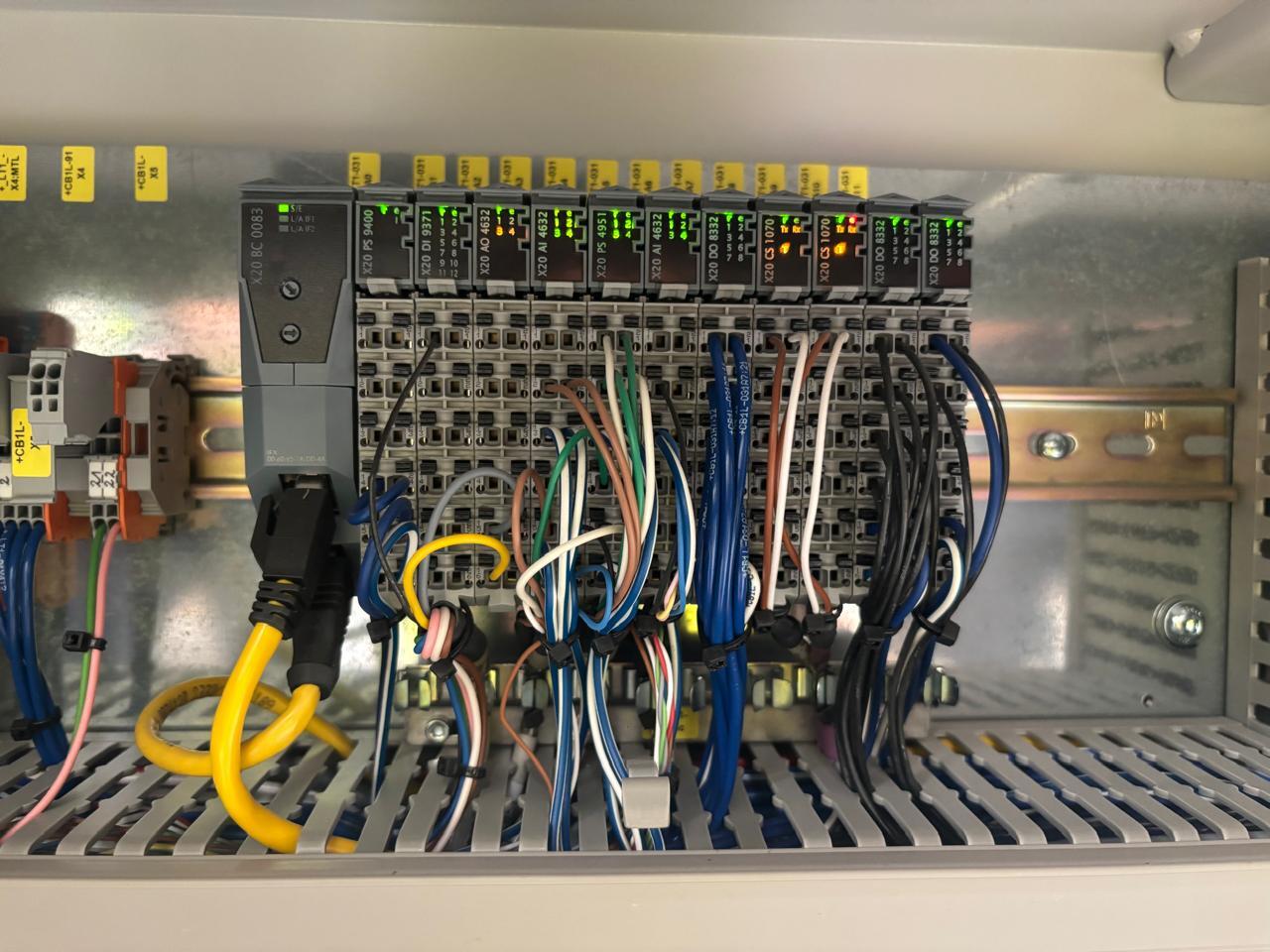
PLC and HMI automation
We install and program PLCs, HMIs and SCADA systems to modernise your existing lines. Without throwing away what already works.
- Modernisation on the equipment already installed
- Backup and documentation of the programs
- Bridge to your information systems
Installed and running.
Not a pilot on a laptop.
Deep experience in integration and development, and a team that genuinely loves this technology. Photographs of systems installed and running.
Your own infrastructure.
No per-user licensing.
Most companies don't invest in technology because the only offer they know is billed per user and per month, forever. Every area you add raises the invoice.
We deploy the model on your own server. You pay for the infrastructure once and inference stops carrying a per-query cost. In the In-Plant mode the processing happens inside your network, which simplifies compliance in automotive and pharma.
From the assessment
to a running system.
We do not sell software. We deliver measurable results in your plant.
Free assessment
We identify which systems don't talk to each other and which data you're not capturing. At no cost.
Technical proposal
Architecture, scope, timeline and estimated return. No hidden commitments.
Development & installation
We build and install in your plant. Iterations you can see every week.
Support & evolution
The system grows with your operation. Ongoing support included.
What people ask
before writing to us.
An industrial AI agent doesn't just answer: it queries your systems, applies your rules, cross-checks information across areas and leaves an action prepared, for example a work order or a requisition. A chatbot generates text. The agent runs tools against your ERP, your sensors and your documents, and the final decision is authorised by a person.
Yes. In the In-Plant mode we install GPU equipment inside your network where the models, the document index and the orchestrator run. The processing happens there and does not depend on an external service. If the process needs deep reasoning, a hybrid mode can be used where only the fields you configure leave.
GPU equipment sized to the case, local models, a document index over your manuals and procedures, the orchestrator with permissions and audit log, integration with ERP, MES, sensors and PLC, plus backup, monitoring and documentation. It is infrastructure that stays, not a service rented per query.
It can prepare the write and propose it, but executing critical actions is always authorised by a person. What the agent does on its own is read, cross-check, calculate criticality, build the file and notify. Writing an order, holding product, changing a machine parameter or committing spending goes through human approval.
In the In-Plant mode, data capture, rules, local models, the document index and internal alerts keep working because they do not depend on an external service. Only what requires a model or an API outside your network is paused.
No. We assign the level of intelligence each task calls for. A temperature alarm is solved with thresholds and rules, no model. Classifying the cause of a stoppage needs a small local model. Vision and anomaly detection call for a specialised model on a GPU in the plant. Only complex reasoning across several systems justifies a large model.
Yes. We connect machines with or without a PLC using sensors, gateways and standard protocols, without replacing the existing control. We also migrate obsolete PLCs while preserving the machine logic, and retrofit equipment no longer supported by the manufacturer.
Automotive, medical devices, electronics, plastic injection moulding, food and beverage, metalworking and water treatment. Also logistics companies, academic institutions, healthcare organisations, state and municipal governments and business chambers. We have operated in Mexico and Spain since 2012.
The diagnostic is free. From there the model is owned infrastructure: you pay for the deployment once, and there is no per-user licence and no per-query charge from an external provider. There are running costs such as energy, maintenance, updates and support, which are sized in the proposal.
With a free diagnostic where we identify which systems don't talk to each other and which data isn't being captured. Then a closed scope is defined on one critical process, with a business metric, before any larger deployment.
Ready to bring AI in
on real infrastructure?
Not a pilot that dies on somebody's laptop. Infrastructure that stays in your plant, with your data inside it and your team running it.
- The diagnostic costs nothing and commits you to nothing
- We answer with an architecture, not a catalogue
- If it is not for you, we say so on the first call